Of Norway and the Endless Summer Night of Tropenatt
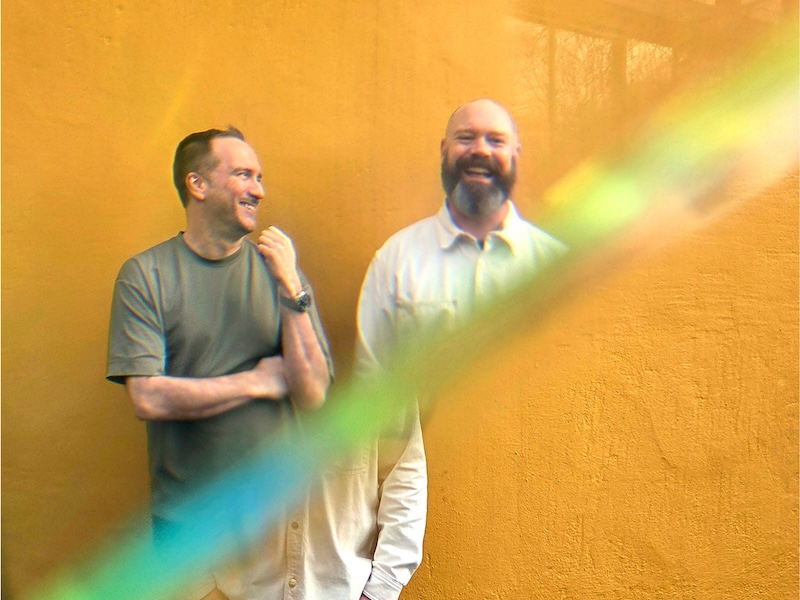
As summer approaches and a familiar, expectant warmth fills the air, Oslo-based electronic mainstays Of Norway prepare for the official arrival of Tropenatt, dropping June 26th, 2026, via Connaisseur Recordings. Taking its name from the distinct Nordic climate phenomenon where daytime heat lingers long past midnight and the twilight never fades into total darkness, the highly anticipated album explores those hazy, sleepless hours where the clock slows down and the night belongs entirely to connection and celebration.
To celebrate the release, Christian Steenstrup, who makes up one half of the project alongside Vegard Dyvik, joined us to discuss the unique sensory and culinary landscapes that shape his life. Fresh off a lively Norwegian National Day celebration, Christian talks music, food, and the joy of his newly renovated kitchen. He opens up about his deep appreciation for the unpretentious, bold simplicity of traditional Norwegian cooking while also sharing a passion for the patient, slow-cooked rituals of French cuisine and the comforting British roasts of his upbringing.
Beyond his favorite recipes, Christian dives into the year-long creative process behind the new music and reflects on Of Norway's two-decade history. He even shares an early musical milestone by providing a link to the very first track they ever produced together, the unexpected result of taking on a remix project years ago when he was still finding his footing in electronic production. The conversation flows seamlessly through his adolescent days playing bass in punk and black metal bands, a lifelong dedication to digging for vinyl, and a nostalgic story about a vintage Numark mixer that he eventually passed on to Todd Terje.
Pour a cold drink, find a comfortable spot out on the balcony, and step into the warm, endless night with Of Norway.

Q: What did your morning look like today? What have you eaten so far, and what is your favorite meal of the day?
Christian: This morning was a little heavy, as we celebrated the Norwegian National Day yesterday, and I had to work this morning. I usually get up about 06:30 every day and don't really eat anything until I have an early lunch at the office at 11:00. So far I have eaten a few walnuts and a few almonds. My favorite meal of the day when I work in the office is lunch, as they have an amazing canteen there with so many great dishes every day!
Q: Do you follow a specific dietary philosophy, or is your palate open to everything?
Christian: I used to be a vegetarian, I also used to be a vegan, I also used to be a pescetarian, etc., haha. But now I don’t follow any dietary rules whatsoever, though I probably should! My palate is open to the whole glorious world of food!
Q: When you aren't in the studio, do you enjoy the ritual of cooking? If so, what are your favorite things to prepare?
Christian: I do really enjoy spending time in the kitchen and planning meals, especially during the weekends. My wife and I recently refurbished the kitchen so I can literally spend all Saturday and Sunday in there. I have even bought a CD player for my millions of CDs that I never listen to anymore. I love the French kitchen, so anything slow-cooked with wine, butter, stock, and meat, fish, or poultry is a favorite!
Q: Looking back, what were the consistent flavors of your family table, and what was the atmosphere of a typical meal like growing up?
Christian: I come from a British & Norwegian background, so a lot of inspiration came from my mother’s cooking. The Brits do love a good roasted dinner, and so do I.
Q: Is there a specific family recipe that you still cook today?
Christian: Anything roasted, such as turkey and chicken, as well as making stock. My mother always makes her own stock. I do have ambitions of learning to make some British dessert classics, such as the absolutely banging Sticky Toffee Pudding.
Q: In the kitchen, what is your favorite "sound" or acoustic texture?
Christian: My favorite sound in the kitchen is the sound of frying food. Can’t beat a good sizzling sound from a hot cast-iron pan.
Q: Did music play a significant role in your household while you were growing up?
Christian: Yes! Growing up, we had a radio in every single room of the house as well as my parents' record collection, which was very inspirational to me when I was young.
Q: For those unfamiliar with your home, how would you describe the essence of Norwegian food?
Christian: Norwegian food can be described as simple and bold. There is a lack of spices and rich sauces in our kitchen, but there is beauty in the simplicity. Our national dish is called Fårikål (Faarikaal), which is sheep meat, peppercorns, water, and cabbage. It's so basic, yet after 6-7 hours of simmering it turns out rich and delicious.
Q: Beyond the traditional, what is your favorite Norwegian "fast food," and can you recommend any hidden gems for eating in Oslo?
Christian: Most of our fast food is "imported," but if I were to choose a bona fide Norwegian classic, I would go for “pølse i lompe," which means sausage in a potato wrap. This is what everyone eats on the Norwegian National Day and pretty much every time they go to the gas station or has had a few too many beers. They are served with tomato ketchup and sweet mustard. If you want extra ketchup or mustard, you ask for “tur/retur sennep” (this means you ask for a round trip of the mustard, not just a one-way trip.)
Q: How did Of Norway first begin, and what was the catalyst for collaborating as a duo?
Christian: We started collaborating 20 years ago. We were both doing music; I was doing rock/indie/punk stuff, and Vegard was doing house music. The collaboration began after I foolishly said yes to remixing a Norwegian band but didn’t have a clue as to what I was doing, so I reached out to Vegard, and the rest is history. This is the result of our first collab together.
Q: Which artists or genres shaped your musical identity during your formative years, and do either of you play instruments?
Christian: This question is always a hard one. There are so many influences growing up. I can mention that from my parents I got the love for Roxy Music. The grooves, the production & the sound design were amazing. Especially on Flesh+Blood. In my adolescence I loved alternative music, especially Sonic Youth, Dinosaur Jr., Swans, and Nirvana. Later I was obsessed with some of the early music from Moby, AFX/Aphex Twin, FSOL, etc. As a student I was 100% into jungle/tech step and DNB as well as hip hop from NYC such as Capone N Noreaga, Mobb Deep, Nas, etc. Parallel to all this, I have always loved metal, hardcore, punk, and black metal. I played bass in metal, punk, and black metal bands.
Q: Can you describe your first encounter with electronic or dance music? What physical or emotional sensations did it trigger?
Christian: I was really into the cassette compilations on Break Records. They were really cheesy, but I liked the early electro sound. My first fully electronic album was by Bomb the Bass and was called Into the Dragon (from 1988).
Q: When did you realize you wanted to become DJs, and what did that first setup look like?
Christian: I used to play “local radio DJ” when I was 10 years old with a cassette player and a microphone, so I guess from that time on it was a dream to become a local radio DJ. I got my first set of decks and a mixer in 1997 when I bought two belt-drive turntables and a 2-channel Numark mixer. I sold the mixer to Todd Terje many years later!
Q: In the beginning, how many times a day did you dedicate to practicing your craft?
Christian: I practiced with two copies of DJ Krust's Warhead as much as I could, every single day, until I could beatmatch.
Q: As collectors, what role does vinyl play in your lives, and what are some of your most precious records?
Christian: Vinyl is very important to me. I have spent all my cash since I was in my teens on vinyl records. I buy from a vast array of genres, so there are always records I want. My Discogs want list is ridiculous! My most precious records are not the ones that are worth the most but the ones I have fond memories attached to. I fondly remember traveling to Oslo to the punk squat called Blitz to buy this amazing punk 7” when I was 16 years old.
Q: At what point did you decide to move from the booth into music production?
Christian: We are still very much in the booth as well. We run a regular club night in Oslo called Afternooners, where we play house, acid, electro, Italo, etc., as well as DJing around the world. We started producing music together in 2006 or 2007.
Q: What is your current studio setup like? Are there any specific pieces of hardware, instruments, or software that you are particularly excited about right now?
Christian: Currently our studio set-up is in Vegard’s home studio. A small space in the basement. We are very much going the hybrid route, where all recording is done in Nuendo (DAW), utilizing a bunch of VSTs and plugin instruments, alongside a few selected outboard effects and hardware synths. Among our favorites are the Elektron Analog RYTM and A4, Moog Minitaur, Roland TB-03, and the Behringer 808 clone. Recording gear favorites are the GSSL (SSL Bus-comp clone), Warm Audio's 1176 version, Drawmer 1976 multiband saturator, and some Klark Teknik Pultec clones. In the box, we are heavy Arturia users and deeply invested in the Softube ecosystem.
Q: How do you approach curating a DJ set, and what is your favorite time slot to play and why?
Christian: I would take the space and the time slot into consideration when preparing. The last couple of years we have played a lot of earlier sets. For example, from 17:00 to 22:00 or 22:00 to 01:00. I like these slots a lot. You can be freer musically, and it is nice to get home early as well!
Q: What advice would you give to a young person just starting out as a DJ?
Christian: Spend all your time looking for good pieces of music that can also be listened to outside of a mixed DJ set. I often say I play songs or tunes, not tools.
Q: Which Norwegian artists should we be listening to right now?
Christian: Ævestaden. They have little to do with club music, but they are an amazing Norwegian/Swedish folk/electronic trio.
Q: The title of the album refers to a specific climate phenomenon. In your own words, what defines a true "Tropenatt"? A great open air, an all-nighter, an intimate evening with friends?
Christian: A great tropenatt for me would be sitting on my balcony outside at night (which is a rare thing due to cold temperatures) while listening to Rosi Plain’s amazing album Prize with some snacks and a cold beer.
Q: This record completes a trilogy that began with Smeigedag and Fløyelskveld. What was the core inspiration for closing this body of work with this specific chapter?
Christian: Smeigedag represents us as children, Fløyelskveld as teens, and Tropenatt as adults. We have decided that this will be our last album, as this format is not really applicable to streaming. A shame, but it is what it is. We are rounding off the trilogy with an album packed full of reference to our musical awakening. Everything we like about electronic music is represented here. Samples, breakbeats, trance, big pads, ambient, techno(ish), arpeggios, electro, bass, etc.
Q: How long did the production and recording process take for this final installment?
Christian: It took us almost exactly one year, so it was a long process, but we are very happy with the result.
Q: In a world of constant digital distraction, you have crafted an album that demands to be heard as a single, cohesive piece of work where every track feels essential. How did you approach the curation to ensure the flow remains uninterrupted from start to finish?
Christian: The label head of Connaisseur Recordings and good friend Alex Flitsch has been instrumental in selecting the tracks as well as putting the tracks in the sequence they are in now. This has been very helpful!
Q: The album covers a vast sonic landscape, from ambient and "feel-good" house to peak-hour tracks. How did you manage to integrate such diverse musical tastes into one narrative?
Christian: I think since we produced the whole album in one period of time without any distractions, it sounds very cohesive. We have used a lot of the same equipment producing it, and the mixdowns were done within a short period of time.
Q: Listening to Tropenatt, it feels like it could have easily lived on a 90s mixtape; fitting perfectly between an LTJ Bukem track and a Sonic Youth song, which brings me to the track "EVOL"; is this an intentional homage to Sonic Youth’s EVOL, and is the sample used a reference to "Secret Girl"?
Christian: It is very much a homage! I love Sonic Youth, as mentioned earlier, and Evol is my favorite SY album.
Q: During the sessions, was there a particular track that flowed instantly, while others required a longer production process?
Christian: The track "Charlie the Welsh" is one big jam session! It just flowed, and hopefully that can be heard in the track.
Q: As this is your final artist album, what are the upcoming plans for Tropenatt in terms of touring or live performances?
Christian: Well, as we don’t have an agent at the moment, nothing is happening here, so if any agents read this, get in touch! :)
Q: Of Norway, thank you for being part of The DJ Cookbook!
Christian: Thanks for having us!
Follow Of Norway on Instagram.
Follow Connaiseur Recordings on Instagram.
Listen to Of Norway here.